
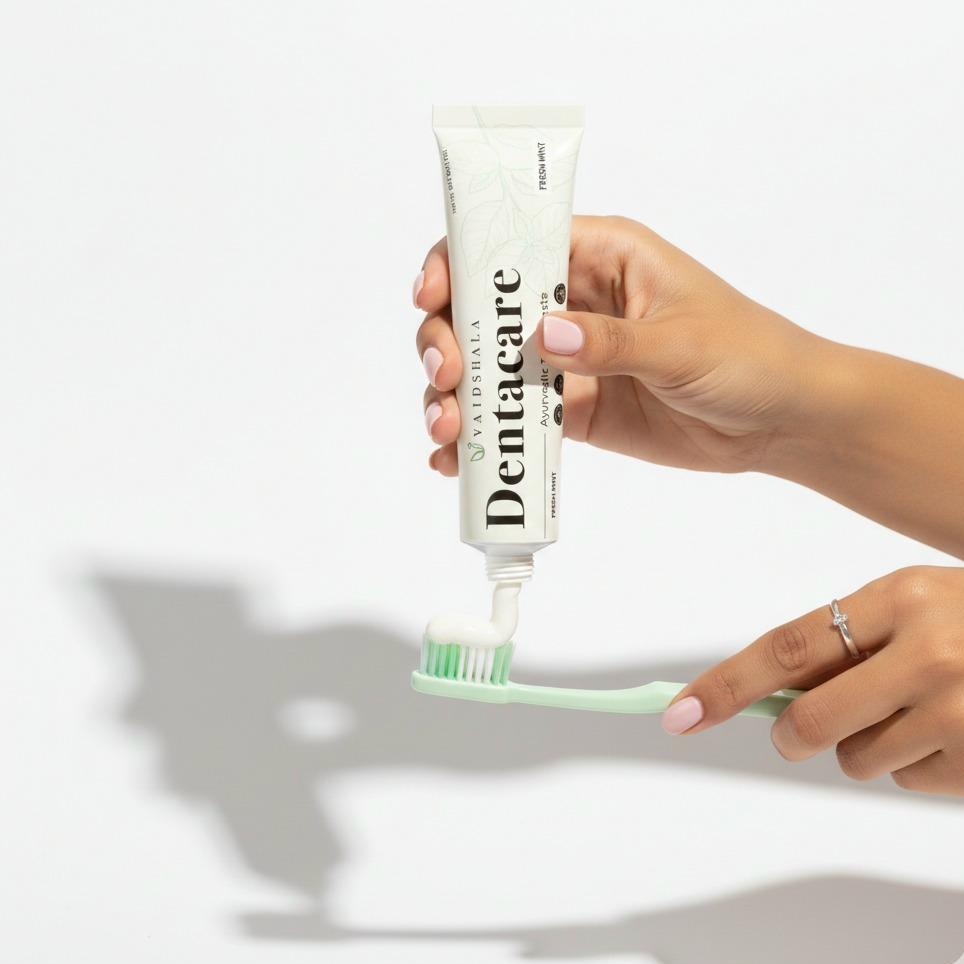
The global teeth whitening market is worth over $7 billion — driven largely by chemical bleaching kits and peroxide strips that promise dramatic results. What the marketing doesn't tell you is that repeated hydrogen peroxide bleaching causes enamel thinning, increased sensitivity, and can damage the pulp of your teeth. The good news: natural whitening methods that work through stain removal rather than chemical bleaching are safer, gentler, and equally effective for the vast majority of people.
1. Activated Charcoal Toothpowder
Activated charcoal is perhaps the most powerful natural tooth whitener available. Its extraordinary surface area — one gram of activated charcoal has a surface area of over 500 square metres — adsorbs stain-causing molecules like tannins, chromogens from tea, coffee, and tobacco, and binds them for removal. Used 2–3 times a week as a tooth powder, activated charcoal can visibly reduce surface staining within 2–3 weeks. Vaidshala Dentacare Toothpowder includes food-grade activated charcoal as a key ingredient.
2. Oil Pulling with Sesame Oil
The regular swishing motion of oil pulling, combined with sesame oil's natural cleansing properties, gradually removes surface stains through mechanical action and emulsification. Users who oil pull daily typically notice a progressive brightening over 4–6 weeks. The benefit is cumulative and permanent (for surface stains) because the stains are removed rather than bleached and later restained.
3. Miswak (Salvadora persica) Sticks
Chewing on miswak sticks releases silica — a mild natural abrasive — and natural cleaning compounds that have been shown in studies to reduce surface staining. The silica in miswak has a gentle polishing action that gradually removes extrinsic stains without damaging enamel. This is one of the cleanest, most natural whitening methods with a documented 1,400-year track record.
4. Triphala Rinse
Triphala's high tannin and vitamin C content provides dual whitening action. Tannins have astringent properties that reduce bacterial stain-formation, while vitamin C is essential for collagen synthesis in gums — healthy gums provide the pink contrast that makes teeth appear whiter. A daily triphala mouth rinse contributes to progressive natural brightening over weeks of consistent use.
5. Neem Twig Chewing
The mild abrasive action of neem twig fibers, combined with neem's bioactive compounds, has a gentle polishing and whitening effect. Neem also reduces plaque (the sticky film on which stain molecules adhere), so teeth stain less quickly. Traditional neem datun users consistently show lower stain indices than conventional toothbrush users in comparative studies.
6. Baking Soda (Sodium Bicarbonate) — Use Sparingly
Baking soda's mild alkalinity and very slight abrasive action can help remove surface stains. It is safe for occasional use (1–2 times per week), but daily use can gradually erode enamel. Mix a small amount with water to a paste and brush gently for 2 minutes, then follow with your regular Ayurvedic toothpaste. Its effectiveness is well-documented — many clinical toothpastes include sodium bicarbonate as an active ingredient.
7. Avoid Stain-Causing Foods Strategically
The most effective 'whitening method' is stain prevention. Tea, coffee, red wine, and dark berries are major stain contributors. Rather than eliminating them, rinse your mouth with water immediately after consumption, wait 30 minutes before brushing (acid from food temporarily softens enamel), and use a straw when drinking dark beverages when possible. These habits, combined with natural oral care, keep teeth visibly brighter.
8. Tongue Scraping for Indirect Brightness
Regular tongue scraping removes the bacterial coating that contributes to an overall dull, yellowish appearance of the oral environment. A clean tongue also means reduced volatile sulphur compound production — the same bacteria that cause bad breath also generate biofilm that adheres to teeth and contributes to staining. Twice-daily tongue scraping is one of the most underrated contributors to a bright smile.
9. High-Vitamin-C Diet
Your teeth's whiteness is partly determined by the health and colour of your gums — pink, healthy gums provide contrast that makes teeth appear brighter. Vitamin C is essential for gum collagen synthesis. Amla (Indian gooseberry), guava, and citrus fruits are rich natural sources. Supplementing with amla or using amla-rich toothpaste (like formulations containing triphala) contributes to gum health and overall oral brightness.
10. Consistency Over Intensity
The most important principle of natural whitening is consistency. None of these methods produce overnight results, and that is precisely what makes them safe — they work gradually and sustainably, removing stains as they form rather than bleaching away layers of enamel. Committed daily practice of natural oral care — Ayurvedic toothpowder, oil pulling, herbal rinse — produces a steady, lasting improvement that no chemical whitening kit can match for long-term safety.
Ready to make the switch to natural oral care?
Whiten Naturally with Vaidshala Dentacare