
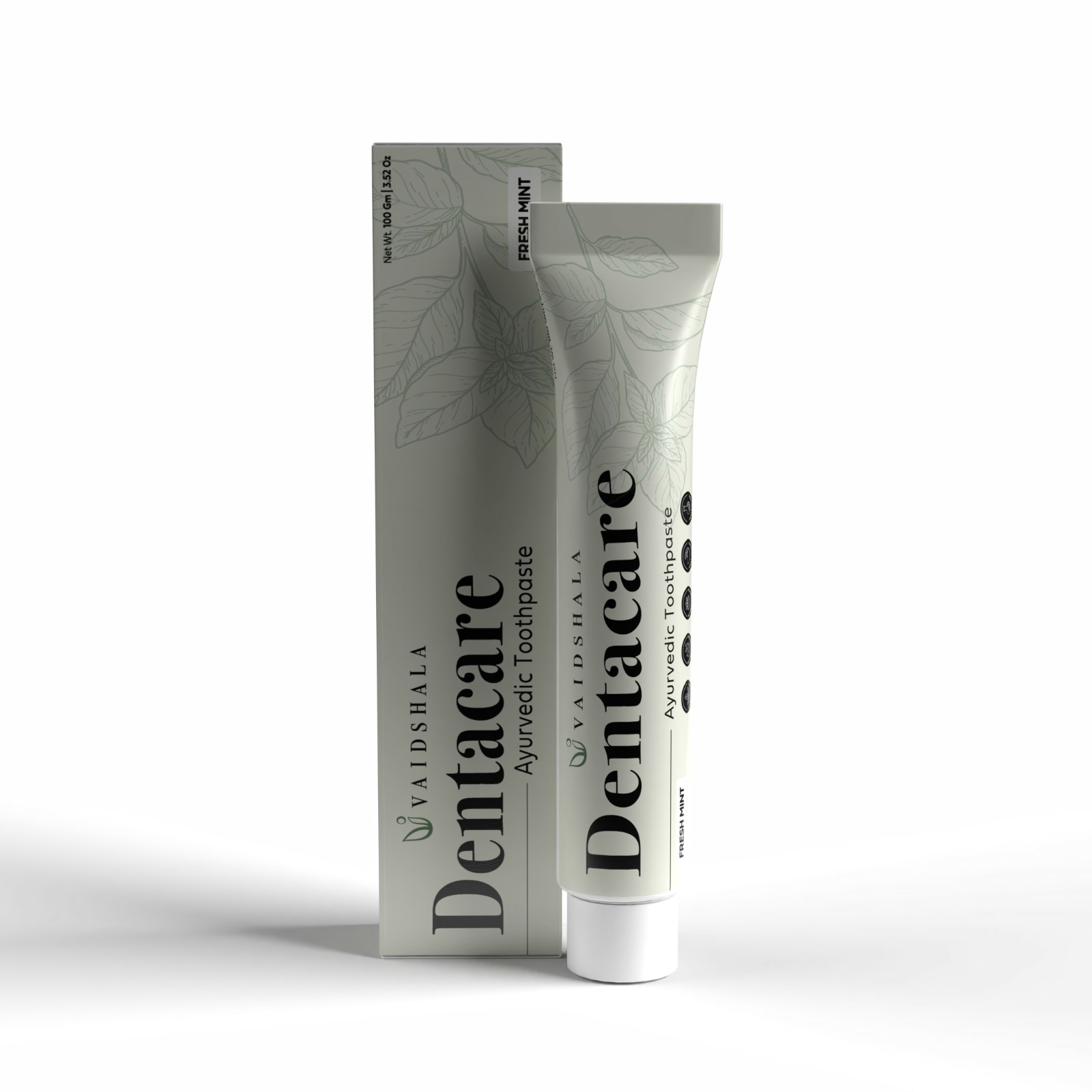
For decades, the scientific community was dismissive of traditional herbal medicine, favouring synthetic compounds that could be patented and standardised. That has changed dramatically. The last 20 years have seen an explosion of peer-reviewed research validating what Ayurvedic practitioners have known for centuries — herbal formulations are not just safe alternatives, they are often clinically superior to their synthetic counterparts.
Neem: Science Confirms Ayurveda
Over 300 published studies have examined neem's oral health properties. Nimbidin and nimbin — neem's principal bioactive compounds — show inhibitory activity against Streptococcus mutans (the primary tooth decay pathogen), Lactobacillus species, and Porphyromonas gingivalis (a key periodontal pathogen). A 2019 randomised controlled trial in the Indian Journal of Dental Research found neem extract gel to be as effective as 0.2% chlorhexidine in reducing plaque and gingivitis.
Triphala: The Antioxidant Powerhouse
Triphala's three constituent fruits — amla, bibhitaki, and haritaki — are among the richest known sources of polyphenols and antioxidants. Amla contains gallic acid and vitamin C at concentrations far exceeding citrus fruits. A 2010 study in the Journal of Periodontology found triphala mouthwash to significantly reduce gingival bleeding and plaque indices over 6 weeks, comparable to chlorhexidine, without the side effects of staining and taste disruption.
Clove (Eugenol): From Folk Remedy to Dental Standard
Eugenol, clove's primary bioactive, is not just folk medicine — it is literally used in commercially available dental cements and temporary fillings. Its analgesic, antibacterial, and anti-inflammatory properties are so well established that WHO has listed it as an essential medicine component. Research shows eugenol inhibits the growth of oral bacteria, reduces inflammation in dental pulp, and provides dose-dependent local anaesthesia.
Activated Charcoal: Natural Whitening Without Abrasion
Activated charcoal's whitening action works through adsorption — its porous surface physically binds to stain molecules (tannins from tea, coffee, and tobacco) and removes them mechanically. Critically, charcoal does not bleach or oxidise enamel the way peroxide does, making it gentle and sustainable for long-term use. Several studies have confirmed its efficacy for surface stain removal without measurable enamel loss at concentrations used in dental products.
Miswak (Salvadora persica): The Original Toothbrush
Miswak is the chewing stick derived from the Salvadora persica tree, used for oral hygiene across Middle Eastern and South Asian cultures for over a millennium. WHO has endorsed its use as a viable alternative to conventional toothbrushes. Research documents miswak's content of fluoride (naturally occurring), silica, astringent tannins, and antibacterial isothiocyanate compounds. Studies show miswak users have significantly lower plaque indices than toothbrush users in several comparative trials.
Why Synergy Matters in Herbal Formulations
One of the key advantages of Ayurvedic formulations is the synergistic effect of combining multiple herbs. While modern pharmacology tends to isolate single active compounds, Ayurvedic formulations deliberately use herb combinations where each component enhances the efficacy and safety of the others. Neem combined with triphala, for example, shows greater antibacterial activity than either compound alone — a phenomenon called positive pharmacological synergy.
Ready to make the switch to natural oral care?
Experience Science-Backed Herbal Care with Vaidshala