Most people brush their teeth twice a day without once reading the ingredients on their toothpaste. Yet the list on most conventional brands reads more like a chemistry textbook than a health product. Some of these ingredients have been linked to hormone disruption, oral cancer, gut microbiome damage, and even neurological effects. Here are six you should avoid — and why.
1. Sodium Lauryl Sulphate (SLS)
SLS is a synthetic detergent added solely to create foam. It has no cleaning benefit beyond the psychological impression of lathering. Research has linked SLS to recurrent aphthous ulcers (mouth sores), disruption of the oral mucosal barrier, and increased sensitivity. A study in the Journal of Clinical Periodontology found that SLS-free toothpaste reduced mouth ulcer frequency by 81% in susceptible individuals. Look for 'sodium lauryl sulphate' or 'SLS' on labels and avoid it.
2. Triclosan
Triclosan is a synthetic antibacterial agent added to some toothpastes to fight gingivitis. However, the FDA banned triclosan from soap in 2016, citing evidence of hormone disruption (particularly thyroid and estrogen pathways), contribution to antibiotic resistance, and environmental toxicity. Many brands still include it in toothpaste. The EU has also significantly restricted its use. There is no reason to choose a product containing triclosan when natural alternatives like neem and clove are demonstrably effective.
3. Artificial Sweeteners (Saccharin, Aspartame)
Most conventional toothpastes use saccharin or sodium saccharin to create sweetness. While the amounts are small, research increasingly suggests that artificial sweeteners alter the gut microbiome even in small quantities. Since saliva carries compounds from your mouth to your gut, repeated exposure through toothpaste is not entirely negligible. Natural sweeteners like stevia or licorice root provide pleasant taste without these concerns.
4. Parabens (Methylparaben, Propylparaben)
Parabens are synthetic preservatives used to extend shelf life. They are well-documented endocrine disruptors — they mimic estrogen in the body and have been found in breast cancer tissue. While most regulatory bodies consider levels in individual products 'safe', the cumulative exposure from using parabens across multiple personal care products daily is a legitimate concern. Paraben-free formulations using natural preservation through low water content (like tooth powders) or herbal antimicrobials are far safer alternatives.
5. Microplastics (Polyethylene Beads)
Some whitening and 'polishing' toothpastes include tiny polyethylene plastic beads as abrasives. These microplastics do not dissolve, cannot be filtered by wastewater treatment, and have been found in marine ecosystems and human tissue. They also get trapped in gum pockets, where they may cause local inflammation. The EU banned their use in 2020, but products still circulate in markets worldwide. Avoid any toothpaste listing 'polyethylene' in its ingredients.
6. Artificial Dyes (FD&C Blue No. 1, Red No. 40)
The blue, red, and green stripes in striped toothpastes serve no functional purpose. They are synthetic petroleum-derived dyes added purely for aesthetics. Several artificial dyes, including Red No. 40 and Yellow No. 5, have been linked to hyperactivity in children, allergic reactions, and — in high doses — carcinogenicity in animal studies. There is simply no reason to accept synthetic dyes in a product used inside your mouth twice daily.
Ready to make the switch to natural oral care?
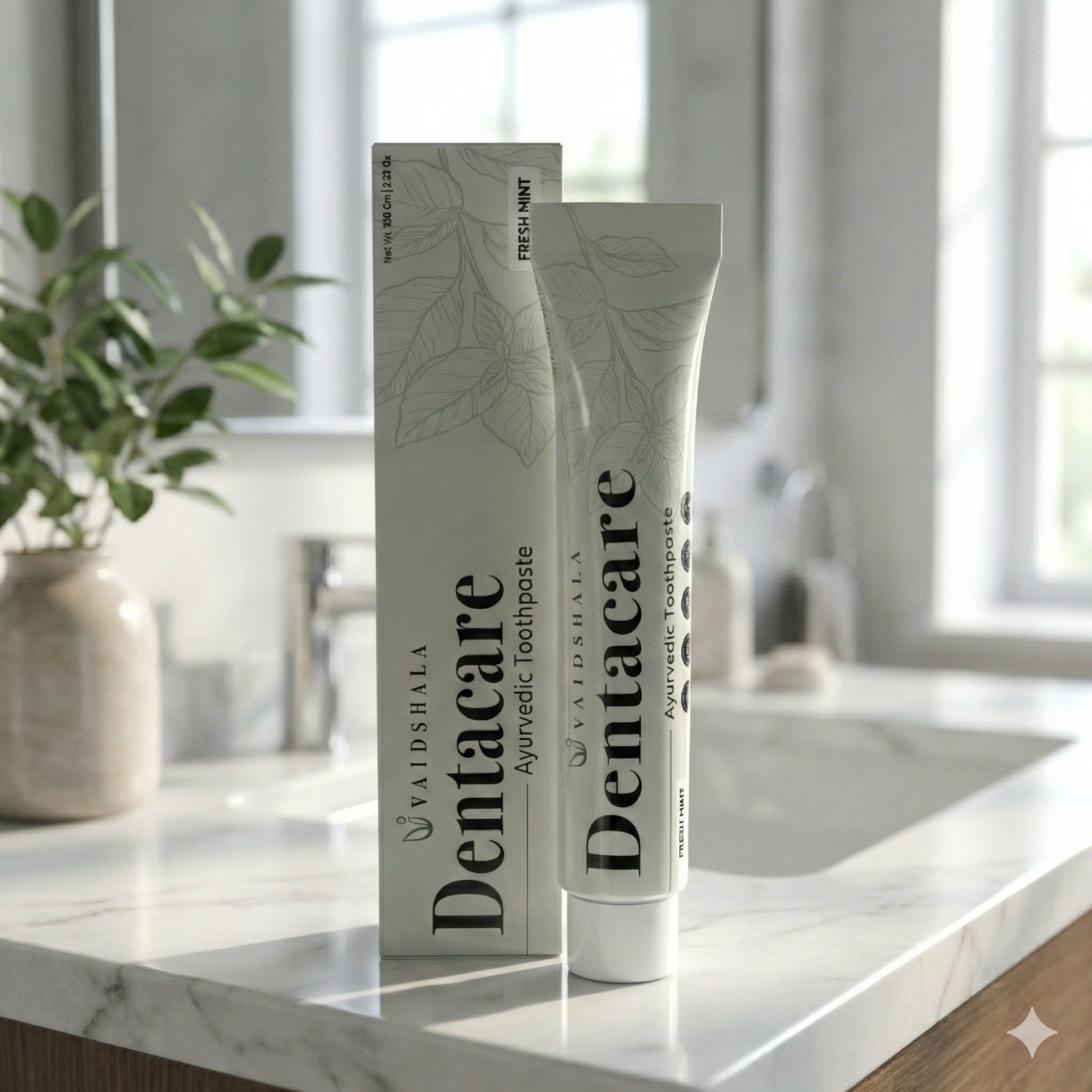
Switch to Chemical-Free Vaidshala Dentacare